

👁️
Post Views: 131,231
[ad_1]
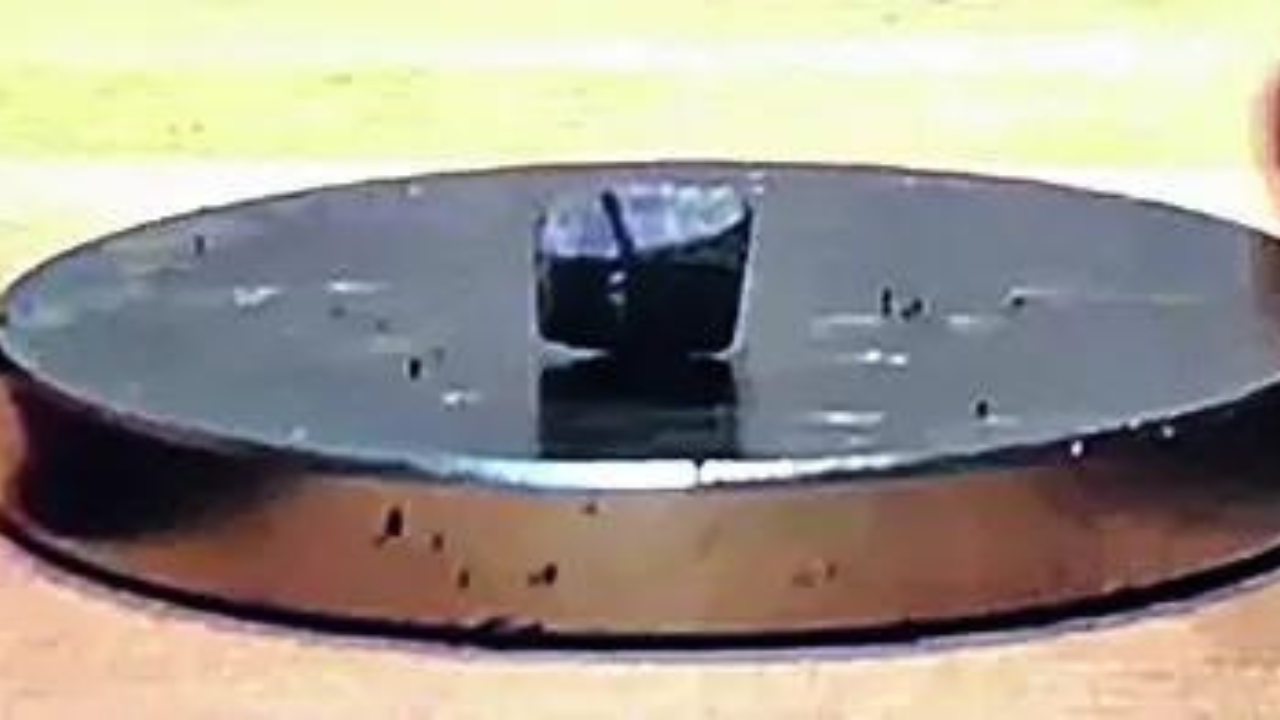
An unusual material, named LK-99, has been presented to the world as a superconductor that would carry electricity at room temperatures with zero resistance. On Twitter – or X, “LK-99” has been a trending topic in recent days, and enthusiasts have hailed what they believe to be a long-sought holy grail of physics, one that would transform everyday life with new technologies to solve climate change and make levitating trains commonplace. Superconducting materials already exist in places like MRI machines and some quantum computers, but only display their superconducting properties at extremely low temperatures, making them impractical for wide use.
The saga started when a team of South Korean scientists, most working for a tiny startup company, posted two reports that described their technique for making LK-99 and the measurements that they said showed the material’s superconducting prowess. (The name of the material comes from the initials of the surnames of two of the scientists – Sukbae Lee and Ji-Hoon Kim – and the year 1999, when they say they first synthesised LK-99.) Most strikingly, they provided a video showing a small sample partially levitating over a magnet. The levitation, they said, demonstrated the Meissner effect, which ensures zero magnetic field inside a superconductor.
Alex Kaplan, who had majored in physics at Princeton University, found out about LK-99 on Hacker News, a news aggregation website. “I was just shocked,” Kaplan said. That night, he shared his excitement on Twitter. With that tweet, which has received more than 132,000 likes, Kaplan joined a group of LK-99 fans who propelled excitement on social media over the past week. Most of the enthusiasts are not experts, however. Kaplan, for example, works as the head of a coffee product.
The scientists who study superconductivity have been quieter. The scepticism remains, because the data provided thus far falls short of being convincing, many experts say. “That data is extremely suggestive,” said Sankar Das Sarma, director of the Condensed Matter Theory Center at the University of Maryland. He pointed out, for instance, that at the temperature that Korean scientists claim LK-99 turns into a superconductor, the electrical resistance drops, but not to zero. The resistance of the material, made of the mineral apatite with some of the lead atoms replaced by copper, is about 100 times higher than pure copper and other good conducting metals. The video is also not definitive, because non-superconducting materials including graphite can also partially float in the same way. The Korean Society of Superconductivity and Cryogenics has convened a panel to verify the findings.
The saga started when a team of South Korean scientists, most working for a tiny startup company, posted two reports that described their technique for making LK-99 and the measurements that they said showed the material’s superconducting prowess. (The name of the material comes from the initials of the surnames of two of the scientists – Sukbae Lee and Ji-Hoon Kim – and the year 1999, when they say they first synthesised LK-99.) Most strikingly, they provided a video showing a small sample partially levitating over a magnet. The levitation, they said, demonstrated the Meissner effect, which ensures zero magnetic field inside a superconductor.
Alex Kaplan, who had majored in physics at Princeton University, found out about LK-99 on Hacker News, a news aggregation website. “I was just shocked,” Kaplan said. That night, he shared his excitement on Twitter. With that tweet, which has received more than 132,000 likes, Kaplan joined a group of LK-99 fans who propelled excitement on social media over the past week. Most of the enthusiasts are not experts, however. Kaplan, for example, works as the head of a coffee product.
The scientists who study superconductivity have been quieter. The scepticism remains, because the data provided thus far falls short of being convincing, many experts say. “That data is extremely suggestive,” said Sankar Das Sarma, director of the Condensed Matter Theory Center at the University of Maryland. He pointed out, for instance, that at the temperature that Korean scientists claim LK-99 turns into a superconductor, the electrical resistance drops, but not to zero. The resistance of the material, made of the mineral apatite with some of the lead atoms replaced by copper, is about 100 times higher than pure copper and other good conducting metals. The video is also not definitive, because non-superconducting materials including graphite can also partially float in the same way. The Korean Society of Superconductivity and Cryogenics has convened a panel to verify the findings.
[ad_2]
Source link


