

[ad_1]

Night is slowly engulfing the south pole of the moon.
ISRO has put the two instruments onboard the Pragyan over to sleep. Both the Alpha Particle X-ray Spectrometer (APXS) and the Laser-Induced Breakdown Spectroscope (LIBS) are now “safely parked and set into sleep mode”, ISRO has tweeted. Their batteries are in fully charged condition.
The first rays of the sun will strike the rover and the lander on September 22. The solar panel is oriented to receive sunlight and the receiver is kept on.
“Hoping for a successful awakening for another set of assignments! Else, it will forever stay there as India’s lunar ambassador,” ISRO has said in the tweet.
During the moon nights in the south polar region, temperature could drop to as low as –173 degrees C.
But why can’t we protect them?
A question that arises is, can’t the electronic equipment onboard the rover or the lander be protected against the lunar cold?
The answer is, yes, they can be. More often than not, spacecraft instruments are protected from extreme temperatures. Examples are the Mars rovers—Spirit, Opportunity and Curiosity. Yes, the Martian nights, just like earth nights, last just 12 hours, but spacecraft such as Voyager, that go far away from the sun, are alive for years in crazily cold temperatures.
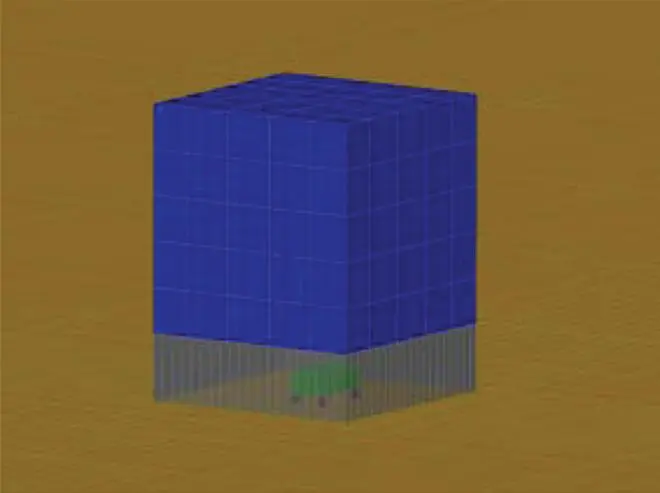
Multi-layer insulator, suggested by a paper in International Journal of Aerospace Engineering
But the Chandrayaan-3 mission’s main objective was to demonstrate soft-landing on the moon. Doing experiments was secondary
Typically, spacecraft have heat generating systems such as ‘radioisotope heating units’ (RHUs) or radioisotope thermoelectric generators (RTGs); the heat generated by the radioactive decay of plutonium-238, provides comfort to onboard electronics.
But these weigh a lot. For example, the RTG onboard the Galileo probe (1989) weighed 56kg. When ISRO’s focus was fully on achieving a soft-landing, adding weight to the lander or the rover would have conflicted with its primary objective.
- Also Read: Pragyan rover crawls on the moon
Scientists are researching alternative methods for keeping a small lunar rover alive during the night. One suggestion is a (low-weight) multi-layer insulation (MLI)–a curtain, like the vertical blinds in our homes—made of insulating material. The MLI can drop down from the bottom of the lander, creating a small chamber between the lander’s legs. The rover can crawl into it for a night’s rest.
But these are for later. For now, after the landing success, 14-days of lander and rover work is good enough.
[ad_2]
Source link


